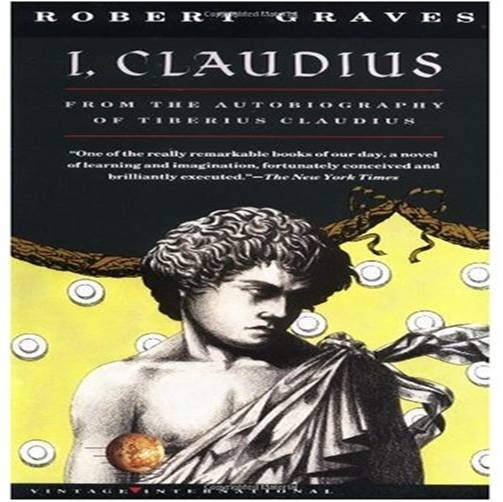
"I, Claudius" by Robert Graves –

Robert Graves has achieved a true masterpiece with these "fake" memoirs of Emperor Tiberius Claudius. The first lines set the tone: “I Tiberius Claudius […] this that and the other who was once and not so long ago either, known to my friends and relatives and associates as Claudius the Idiot, or That Claudius or Claudius the Stammerer or Clau-Clau-Claudius or at best poor Uncle Claudius am now about to write this strange history of my life….” Graves’ achievement’s lies in the precise description of the Roman times, the depth of the characters in their struggle to gain power or save their lives and in transferring to his lead character the tragic intensity of a Greek tragedy. From the first to the last line the reader is immerged in the time of Claudius and in the struggles of his life.
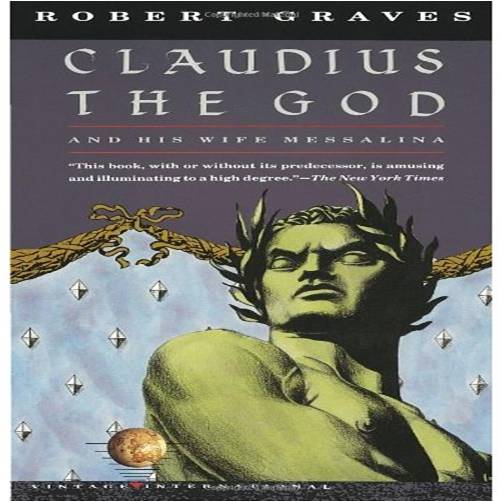
"Claudius the God" by
Robert Graves –
This is the second volume of the novel of Robert Graves
about Roman Emperor Claudius. Like in the first
installment, the author writes as if it was the emperor
himself writing his own memoirs. Again the style and the
writing is very convincing in making the reader believe
that he is indeed reading the thoughts of Claudius and
as a result, the book works very well in giving an in
depth glimpse of first century Rome. My favorite part
was without a doubt the first section about Herod
Agrippa, Claudius’ architectural achievements and the
conquest of Britain.
Then, as the story unfolds further, the reader becomes
less and less at ease with the compromises, the naïveté
and the acts of cruelty of the hero who presented
himself in the first book as a defenseless, friendly and
more importantly idealistic republican at heart. In this
context the acts of the emperor are more difficult to
justify and the idea that the emperor would discuss
these honestly in his memoirs seems far- fetched.
This feeling of uneasiness grows throughout the book as
the emperor’s behavior becomes more and more out of
touch with reality and justice. The reader feels that
the author himself becomes increasingly challenged to
find excuses for his hero or at least to express the
true reasons of his behavior.
The last section of the book, from the discovery of
Messalina’s infidelities to the description of the
emperor’s reign with his fourth wife Agrippina the
younger and the rise of Nero is frankly quite painful to
follow. The behavior of Claudius becomes completely
enigmatic and the concept of a self-reflecting memoir
becomes then completely unbelievable.
Nevertheless the full saga remains an outstanding work
of history and literature that I would recommend to
anyone interested in history, the Roman period and the
tragedy of the early Roman Emperors.